




How To Off-Road in Your Jeep Wrangler
The Jeep Wrangler has earned its place as America’s favorite off-road vehicle through years of proving itself on the toughest trails. Whether you’ve recently acquired a new Wrangler, you’re just getting started with off-roading, or you’re looking to elevate your skills on Northern California’s varied terrain, this guide is here to help. We’ll walk you through techniques that’ll help you tackle anything from the gentle Sierra Nevada foothills to the gnarly rock-crawling spots of the Fordyce Creek with confidence.
Essential Pretrip Preparation for Your Jeep Wrangler
Before you hit those trails, it’s essential to equip your Wrangler with supplies to deal with any scenario you might face.
Kits: Recovery and First Aid
Ensure your recovery kit has everything it should, such as recovery straps, gloves, snatch blocks, tow rings, tree protectors, and shackles — they’re your ticket out of trouble and enable you to help others who are stuck. Another essential is your first-aid kit. Stock it with all the basics and pack it in a lightweight, durable container.
Navigation Aids and Emergency Supplies
Equip your Wrangler with navigation aids, such as two-way radios and GPS units, especially if you’re venturing into areas with poor cellular service. Also pack shelf-stable food, water, blankets, flashlights, extra clothes, and fire-starting supplies. Air compressors help you adjust tire pressure to optimize traction, and off-road jacks with larger wheels will prevent sinking in soft terrain. Don’t forget to check that your spare tire’s in place.
Full Vehicle Inspection
Give your Jeep a detailed once-over before you set out. Check your oil, coolant, hoses, brake fluid, steering and transmission fluids, tire condition and pressure, lights, wipers, battery connections, and fuel. Also inspect underbody components, such as suspension parts, skid plates, steering links, tie rods, driveshafts, U-joints, and axle seals. Always let someone know your planned route and return time.
Choosing the Right Off-Road Terrain for Your Skill Level
Be honest with yourself about your abilities and the terrains your Wrangler can handle. If you’re new to off-roading, stick to fire roads, well-kept dirt paths, and trails with few obstacles. Once you’ve gained more experience, you can move up to intermediate trails with some rocks, mud, sand, and small water crossings. Start small, build skills gradually, and tag along with experienced drivers who can show you the ropes on Northern California’s sweet spots, from Auburn to the legendary Rubicon Trail.
Essential Off-Road Driving Techniques
Whether you’re new to off-roading or looking to refine your skills, the following tips will help you get the most out of your Jeep Wrangler while staying safe and in control on any terrain.
Know Your Wrangler
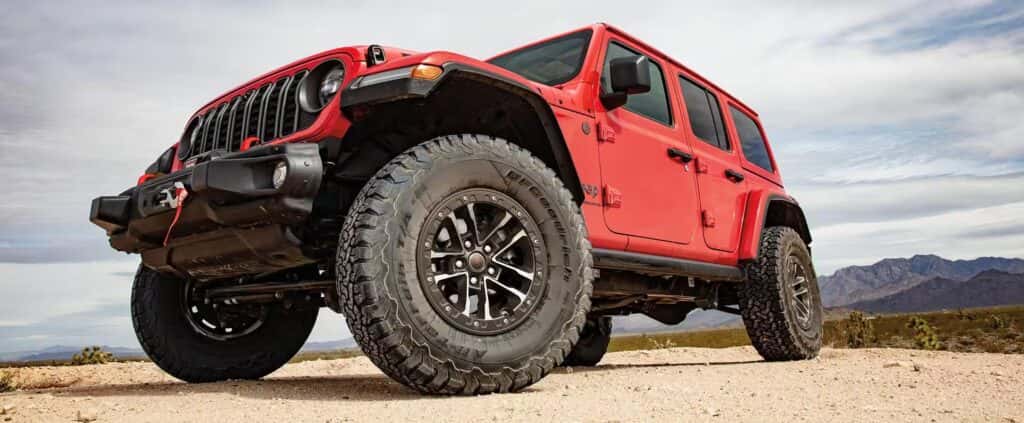
Get to know your Wrangler’s capabilities. In the base Sport trim, you’ll find the Command-Trac four-wheel-drive (4WD) system, which is ideal for mixed on-road and off-road driving. The various Rubicon trims bring Rock-Trac systems and locking differentials designed for more serious off-roading and demanding terrains. The Rubicon 392 offers the most extreme off-roading prowess, allowing you to really push the boundaries.
How and When To Use the 4WD Modes
Familiarize yourself with your Wrangler’s 4WD systems and which mode to use for various terrains and conditions. 2H mode is great for normal driving on dry roads. Switching from 2H to 4H mode (at speeds of up to 55 mph) splits the torque 50/50 between the front and rear, providing more traction for slippery conditions. 4L mode handles steep climbs, rocks, and deep snow or mud, enabling you to master smooth throttle control, momentum management, steering on loose surfaces, and safe hill techniques.
The Importance of Tire Pressure
Tire pressure can make or break your off-roading experience. It improves performance and safety on certain terrains.
Here’s the recommended tire pressure for each type of terrain:
- Sand: 12 to 15 psi
- Mud: 15 to 20 psi
- Rocks: 18 to 22 psi
- Gravel: 20 to 25 psi
If you’re new to off-roading, seek professional advice to ensure your tire pressure is appropriate for your vehicle’s weight, tire size, and the specific terrain and conditions you’ll be facing.
Weather-Specific Off-Roading
Weather can change everything, turning easy trails into treacherous feats that humble even the most veteran off-roaders.
Winter Weather
When you encounter snow and ice, your Command-Trac 4WD system’s 4H mode can help you by providing equal power to both the front and back wheels. If you own a Wrangler Rubicon, you get extra winter help with the Rock-Trac system, low-range gearing, and Tru-Lok electronic differential locks.
Ensure you anticipate those slick spots and switch to 4H mode before hitting them, remembering to make that switch at steady speeds below 55 mph on straight stretches. Maintain gentle input on controls and keep a distance from other vehicles, as stopping takes longer on slippery surfaces.
Sizzling Summers
During those hot California summers, take plenty of water in insulated jugs on your off-roading adventures. Check your coolant system before trips, and if you’ll be towing, consider adding a transmission cooler. Roof awnings are also advisable if you’re going on long trails in extremely hot weather.
Trail Etiquette and Environmental Responsibility
Being a good trail citizen ensures California’s amazing off-road spots remain open for everyone to enjoy. Stick to marked trails, take all your trash back with you, respect private property signs, pay attention to wildlife areas and seasonal closures, follow right-of-way customs, help other drivers who are stuck, and camp thoughtfully with minimal impact. You can also check out courses on trail etiquette, such as those provided by Tread Lightly!
Recovery Techniques for Getting Unstuck
Items you should have on hand in case you get stuck include heavy-duty winches, recovery straps and cables with high stretch ratings to absorb shock loads, recovery tracks for solid footing, and tire-pressure adjustments. Keep safe when winching by wearing gloves, safety glasses, sturdy footwear, and high-visibility clothing. Also, stay outside the winch line’s danger zone.
You can use direct winching if you’re on solid ground, ensuring you find a stable anchor point, verify capacity, and clear obstructions. If the terrain is more challenging, multipoint systems or progressive techniques are best. Assess the situation, and if you’re unsure you have the equipment and knowledge to free a vehicle or you’ve attempted it without success, call for professional help.
Jeep Wrangler: The King of Off-Roading
The Wrangler is engineered for off-roading adventures with its advanced 4WD systems, up to 10.8 inches of ground clearance, and heavy-duty suspension made to absorb impacts. Its Trail-Rated Badge means it passed rigorous off-road tests for traction, ground clearance, maneuverability, water fording, and articulation. Top 2025 accessories include off-road LED light bars, heavy-duty winches, all-terrain tires, lift kits, and skid plates.
Experience the Ultimate Off-Road Adventure in Your Jeep Wrangler
To experience the Wrangler’s off-roading magic for yourself, drop by Auburn Chrysler Dodge Jeep Ram in Auburn, California, to check out our Wrangler lineup. You can also chat with our team about the best gear for Northern California’s trails. We’re here to prepare you for your next great adventure.